Showing posts with label Reviews. Show all posts

Monday, 12 March 2018

Asus Zenfone 5 and Asus Zenfone 5Z Review

Reviews

The latest Asus smartphone - Asus Zenfone 5 and Asus Zenfone 5Z has been features Artificial Intelligence (AI) and a great camera to help users take better photos.

The AI in both the smartphones can detect and identify which picture user is taking and in result it automatically apply the best settings accordingly.

Both the phones are featured with a 6.2-inch Full-HD Plus display having a resolution of 2246 by 1080 pixels.

The one main difference between these two smartphones is that the 5Z model has Qualcomm's latest Snapdragon 845 processor while the 5 model has a Snapdragon 636 processor. Both phones have a fingerprint sensor and a dual-lens camera (8 megapixels and 12 megapixels). 

The camera has been featured with a new Sony image senor, the IMX363, and has a 120-degree wide angle lens.

The Asus Zenfone 5 has been packed with a 4GB of RAM and 64GB of internal storage while the Asus Zenfone 5Z has twice of Asus Zenfone 5's RAM and internal storage.

Asus Zenfone 5 may be available from June for about €400 and Asus Zenfone 5Z may be available from July for about €600.

Friday, 12 January 2018

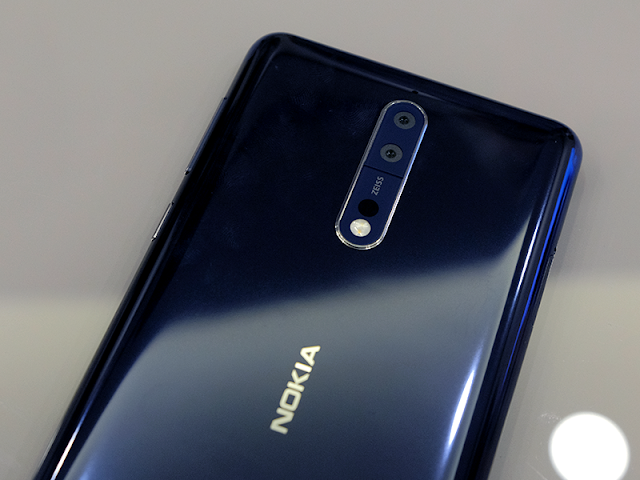
Bad DxOMark Camera Rankings for Nokia 8

Gadgets

HMD Global a year ago propelled the Nokia 8 as its choice camera cell phone - the organization's first with Carl Zeiss optics. While the organization is putting forth convincing highlights a double camera setup and 'bothie' mode to go up against the opposition, DxOMark camera rankings indicate poor outcomes for the Nokia 8. The DxOMark group brings up some key change territories that could make the most recent Nokia leader a superior choice against the best end models from Apple, Samsung, Huawei, and different brands. 

Not at all like the iPhone X that accomplished a general score of 97 or the Samsung Galaxy Note 8 that scored 94, the Nokia 8 has gotten a fundamentally low appraising in DxOMark audit, with an aggregate score of 68. The cell phone sits just beneath the Lava Z25, in any case, it procures a superior position against the Nokia 808 PureView that got a score of 61 from the DxOMark group. 

DxOMark reports that the essential camera of the Nokia 8 produces "pleasant pictures" in a few circumstances, with a decent measure of introduction and more often than not with exact white adjust. In any case, at times, the group watched that the pictures demonstrate very low levels of immersion and some detectable shading rendering contrasts amongst focus and edges of the edge. With respect to the dynamic range, it is observed to be great however just when the preloaded Auto HDR mode is empowered. 

Some recognizable slacks are seen as far as surface and clamor that influence the camera execution of the Nokia 8. Among different situations, genuinely solid commotion is guaranteed to be unmistakable in plain shading zones even in brilliant light, and levels of points of interest are additionally for the most part low with a brimming with obscured subtle elements and surfaces. The itemizing in shots diminishes advance in indoor and low-light shooting conditions. Additionally, the DxOMark group has detected that the Nokia 8 experiences an exceptionally perceptible loss of sharpness in the field, however solid non-abrasiveness regularly obvious close edge edges. 

The Nokia 8 utilizes differentiate recognition, stage location, and laser innovations. This blend, the DxO group reports, empowers the self-adjust arrangement of the cell phone to deliver precise outcomes as a rule. In any case, the outcomes are nearly poor in bring down light. It is additionally seen that the introduction and shading are better than average when the cell phone utilizes the inherent double LED streak, however some observable red-eye impact exists particularly in streak picture shots. 

Regardless of the way that the double camera setup of the Nokia 8 bolsters 2x zoom, DxOMark prescribes the optical zoom factor just for crisis circumstances as there isn't any committed zooming focal point or a higher determination auxiliary picture sensor to keep up a harmony amongst zooming and non-zooming comes about. In any case, the bokeh mode that hazy spots the foundation to feature the closer view subjects is asserted to perform on a more elevated amount than the vast majority of the contending offerings. There are a few curios unmistakable, however the mode conveys wonderful bokeh comes about. 

Going to the video comes about, DxOMark engineers feature low self-adjust and adjustment sub-scores. The adjustment framework on the Nokia 8 is said to perform on a very comparable level as the Samsung Galaxy S6 Edge that was propelled in 2015. Thus, the DxOMark group has watched that presentation venturing on the cell phone is recognizable when the enlightenment changes amid recording, goes with low levels of points of interest. Having said that, video cuts recorded from the Nokia 8 are found to indicate great target introduction and shading rendering in brilliant light and sufficiently bright indoor conditions. 

The double camera setup of the Nokia 8 (Review) incorporates two 13-megapixel picture sensors - while one is a RGB sensor and accompanies optical picture adjustment (OIS), the other one is a monochrome sensor. Both are pressed with a gap of f/2.0, 1.12-micron pixel components, stage recognition self-adjust, a 76.9-degree wide-edge focal point, stage location self-adjust (PDAF), double tone LED streak, and an IR rangefinder. A 13-megapixel picture sensor is accessible on the front with PDAF, 1.12-micron pixels, a f/2.0 opening, and a 78.4-degree wide-edge focal point. The cell phone additionally has OZO Audio innovation that empowers spatial 360-degree sound account utilizing three installed receivers.

Tuesday, 2 January 2018

The Coolpad Cool Play 6 is more a camera phone than a gaming device

gadgets,review


Thank the lord for Moore's law. The law that states technology progresses exponentially has made enjoying flagship features in a budget phone a possibility. The dual cameras that were first seen less than a year back is now a repetitive trend. The vast empty space at the back of phones has been screaming for more tech and dual cameras have stepped in to fulfill desires. The Chinese company Coolpad has also taken the bait. In fact, it was the first to bring the technology down to the masses in the form of the Coolpad Cool 1. And now this week, the company has done it again with the Coolpad Play 6. But as the name suggests, dual cameras isn't the flagship feature of the phone. It should have been. For the few days, I got to use the device, the camera indeed stood out among the rest of the features. But Coolpad wanted to pitch the phone as a gaming device. So it put 6 gigabytes of RAM in it and touted it as a game-changing feature. 

On paper, it is indeed a breakthrough. For Rs 14,999, the most you get in a phone is 4GB of RAM. Coolpad took it a step further and put as much RAM as the OnePlus 3T which is a premium flagship grade device. That's nice but it remains to be seen if there are any real benefits to that. 

But leapfrogging technology is one thing. Whether it's needed or not is something entirely different. It can be argued that one does not need more than 4GB of RAM in a phone for doing day to day tasks. Anything above that is a mere novelty. The RAM on a smartphone, like PCs is for keeping apps open in the background. More the RAM, more apps can remain active. There are also memory intensive apps that require a lot of memory to run smoothly. But those kinds of apps on smartphones are few and far between, unless the phone supports VR and AR in which case, it makes sense to put more memory on the phone. Coolpad's new toy has neither. 

More RAM on PCs makes more sense because of software like Adobe Photoshop and the likes which actually require a whole lotta memory to work. But where's the need for so much on a phone if there's no provision to use it all? 

Instead, a whole lotta RAM on a smartphone tends to become counterproductive. Unless the software on the phone is optimised correctly, 6GB RAM keeps more apps open in the background than required. Those active apps keep the processor running which drains power faster and the phone runs out of battery quicker than it should. So much for Moore's law, eh? Even the damned RAM uses up more battery. 

Now Coolpad wants you to think that its latest device is perfect for gaming because of the massive amount of RAM it has. Instead, if it touted the phone's imaging capability, the phone would have been more appealing. In the few days, I got to test the device, the phone's camera outperformed dual camera phones in that price range. The twin 13-megapixel camera leverages RGB and monochrome optimally to produce well-detailed photos even under poor lighting. Of course, it's nothing like the premium dual camera phones like the Honor 8 Pro or the OnePlus 5, but for those within a budget, it won't disappoint.. 


The Coolpad Cool Play 6, as a result, is a miscommunication. It's more a camera phone than a gaming device. If you are okay with a heavily modded UI with ample bloatware, the Coolpad Cool Play 6 has the potential to be a dependable phone, especially while preserving memories. 

Monday, 25 December 2017

Google Pixelbook review

google pixel book, review

We’re talking about the Google Pixelbook, of course, a machine that lets you type freely in Google Docs as well as it plays games acquired from the Google Play Store. In other words, this is Google’s very own take on the Surface Book. And while you shouldn’t expect it to snap right off the hinge, there are some nifty features here that advance its versatility. 
First of all, the Google Pixelbook has a working touchscreen with stylus compatibility, although the pen itself is unfortunately only sold by itself. There’s also a snug keyboard and a glass trackpad, both of which rival Apple’s best. At that point, the beefy specs are merely icing on the cake, but this machine does boast a 2,400 x 1,600-pixel display as well as 7th-generation Intel Core processors.
In Australia, things are a bit different. You’ll have only two options are far as spec configurations are concerned. The first will set you back $1,522, and it comes with an Intel Core i5 processor and 128GB of SSD space. The most capacious version of the Google Pixelbook in Australia, unfortunately, includes an Intel Core i7 CPU and 256GB for SSD storage. The latter model is priced at $1,804.26.
Now, let’s talk about how this holds up against this year’s Samsung Chromebook Pro and Asus Chromebook Flip, both of which were designed in close conjunction with Google to jump-start the firm’s Android app push on Chrome OS. Both of these laptops are considerably less expensive, with Samsung and Asus’ currently selling for $499 (about £375, AU$647) and $459 (£675, AU$899), respectively.
However, they’re both markedly less powerful, containing the same 6th-generation Intel Core m3 processor that’s similarly created for low power, and thus low heat, which allows it to take advantage of fanless chassis designs. That said, they’re both beautiful Chromebooks in their own right, even if they offer considerably less memory and local storage.
In the end, these two Chromebooks are a better deal for what the Chromebook platform is today, but the Pixelbook isn’t about what’s better today – it’s about the future. The Google Pixelbook is to Chromebooks of the future what Microsoft’s Surface line was to 2-in-1 Windows 10 devices that followed it. 

Design


The Pixelbook is clearly the beautiful result of years of work on Google’s part in refining a unified design across its hardware offerings. But, the Pixelbook could also be seen as a sort of coming of age for Google’s Chromebook design philosophy.
This is, without a doubt, Google’s most attractive and well-conceived computing device yet. From the brushed aluminum frame with flush edges to the rubberized palm rest and underside, every design element has achieved style and substance in equal measure.
Of course, anybody who hasn’t bought a laptop in the last few years might need some adjustment to get used to having just two USB-C 3.1 ports. But, at least it’s ready for the future. Speaking of which, the webcam is equally prepared for an increasingly video-centric future with a 720p resolution and 60 frames-per-second capture rate.
Sadly, the same can’t be said of the audio performance. As has become the growing trend in the thinnest and lightest laptops, Google crammed the speakers beneath the keyboard, and the result is awfully tinny sound. Luckily, there’s a 3.5mm audio jack here that allows you to hook up the Pixelbook to external speakers or a pair of headphones.
On the upside, the glass trackpad is a delight to use, tracking super smoothly and accurately both with single- and multi-touch gestures. However, we found that the trackpad doesn’t like us resting our thumb on the trackpad to click while tracking with our index finger – a common use case, but not this editor’s personal preference.


Likewise, the Pixelbook keyboard is among the best we’ve ever tested. The backlit keyboard’s keys are well-spaced, and the 0.8mm travel is a delight with forceful feedback. We also appreciate the subtle, deeply satisfying clicking sound the keys make – it’s distinct from every laptop keyboard we’ve tested, and now we’re going to expect it everywhere.
The ‘Pixel’ in Google’s eponymous laptop earns its name when it comes to the 3:2 Pixelbook display. At 235 pixels-per-inch (PPI) and accurate color reproduction, this display rivals some of the best around, Chromebook or not, like the 267-PPI Surface Pro and 227-ppi MacBook Pro (13-inch).
The panel works well for movies and photos, not to mention photo editing. The 400 nits of brightness help hugely with this, but it’s still a glossy screen and as such doesn’t stand up to direct sunlight all that well. At any rate, the display is also sharply accurate to the touch, especially when underneath the Pixelbook Pen.

Pixelbook Pen and Google Assistant


First off, we’ll just say that it’s a damn shame that the Pixelbook Pen isn’t included in the price of the laptop, as it’s arguably crucial to the experience. However, we’re not about the say that the stylus isn’t worth the price of admission because it 100% is worth it – if you can spare it.


The Pixelbook Pen works excellently as a stylus, offering plenty of pressure response as well as tilt support, making drawing on the display a pleasure. The display’s snappy response helps the digital ink follow close enough behind the pen that any delay is imperceivable.


On the Pixelbook Pen sits a single button which is essentially a Google Assistant button, but also seems to incorporate some of the new Google Lens technology found on smartphones, like the Google Pixel 2. Pressing the button while inking turns that ink into a thick blue, but doesn’t actually draw anything.


Instead, anything captured inside this blue ink is sent to Google Assistant for analysis, which in turn presents anything and everything Google’s servers can muster about whatever you encircled. Circle a picture of a hippopotamus, and Google Assistant will hit you with a Wikipedia page on the animal. In fact, Google’s knowledge graph runs so deep that we circled a picture of Office Space’s Ron Livingston, and Google Assistant spat back his character’s name – Peter Gibbons – before telling us more about the actor.
This will be an incredibly powerful tool for students, particularly, but users, in general, will benefit. 


Another plus regarding the Pixelbook Pen is that it’s opened up Google Keep to support pen input, even from the lock screen, making note-taking that much easier. There are even apps that can transcribe the Pixelbook Pen’s scrawlings into traditional text.


However, one huge flaw in the Pixelbook Pen is that it doesn’t attach to the laptop in any way, not even via magnets, like the Surface Pro. This oversight makes it that much easier to lose this stylus that cost you so much money. Plus, it runs on AAAA batteries, whereas a rechargeable solution would’ve been much more worthy of the price tag.
As for Google Assistant, the service can be accessed either through a dedicated keyboard button or via your voice, if you don’t invest in the Pixelbook Pen. Though, the latter only works when the laptop is logged into – waking the Pixelbook with a ‘Hey, Google’ command is in the works, we’re told.
In general, Google Assistant is just as helpful as it is on smartphones and renders in the exact same way, with an OS-level chat record as well as a voice response.

Saturday, 16 December 2017

Xbox One’s ‘Year in Review’ breaks down your biggest achievements. You should get out more

Xbox game review


Gamers today can get an itemized breakdown of their biggest achievements as well as total hours spent in front of their Xbox over the past year. Microsoft’s new 2017 Xbox Year in Review site is basically a litmus test for couch potatoes.
After visiting the site and logging in with your Xbox Live Gold account, the page shows off a variety of stats. I would presume the display would be much more meaningful if I weren’t measuring my own stats (I typically game on PC or Nintendo’s Switch while on the go). But, here’s an idea of what all that magical data looks like.
The feature the follow-up to last year’s Game Crest tool even breaks down how you compare to both your region and the world average. Seems I’ve got some catching up to do.

Wednesday, 6 December 2017

Can OnePlus 5 replace Google Nexus?

Reviews

The OnePlus 5 is priced at Rs 32,999 for the 6GB/ 64GB version, and Rs. 37,999 for the 8GB/ 128GB version which makes it cheaper than the current Pixels, and in all likelihood cheaper than the upcoming Pixel 2 as well. For that price, you get pretty good hardware with a Snapdragon 835 SoC, which is by far the most powerful processor in Qualcomm’s stable at the moment.
But as a Nexus user, the Android experience and the regular updates have been a big part of the package, apart from the performance, which is an area that the OnePlus 5 does deliver on. So as a Nexus user, how is the experience of moving to the OnePlus 5?
The good news is that with Oxygen OS you are getting a UI that is pretty close to stock. You’ll also feel at home with the OnePlus launcher, which looks a lot like the Pixel launcher. Google Assistant is also available right away by long-pressing the fingerprint scanner. In these ways, it's pretty close to the stock experience, but if you are among the ones who tinker with their phones, the developer community support for OnePlus devices is huge. You would find multiple custom ROMs and tweaks for the OnePlus 5.
In terms of updates, Google would still be the fastest to ship out Android updates to its smartphones but OnePlus isn’t far behind. We have seen that the company could ship out Android updates for the OnePlus 3 and the OnePlus 3T faster than other manufacturers in the market. So you won’t really be missing much if you do think about the OnePlus 5.

google nexus


Google's Nexus smartphones were known to be the flag bearers of the Android operating system. While they were made by different manufacturers over the years, Googlehad a close eye on the entire process to ensure you got a pure Android experience.
Things changed last year though, when Google decided to launch the Pixel range of smartphones. The introduction of the Pixel and the Pixel XL marked the end of the Nexus lineup, and the higher pricing for the Pixels meant that the stock Android experience was no longer affordable.
That means that if you are a Nexus user, you only had two options for an upgrade - stick to your existing phone for as long as Google supports it, or switch to another brand and live with its version of Android. But if you're a Nexus user, well, September 2017 is when the company stops pushing Android updates other that security patches for the Nexus 6P and the Nexus 5X.
If you have one of those phones then there aren't too many options available if it's time to upgrade to a new mid-range flagship. With the launch of the OnePlus 5, there's another option around now though.
For these reasons - apart from the overall performance and other things discussed in our review - if you're a Nexus user who has been looking for a switch, then the OnePlus 5 looks like a likely option.

Thursday, 23 November 2017

Why the OnePlus 5 was convenient to people than iphone


A good camera has become a necessity in these days of Instagram and Snapchat, so it’s no surprise Smartphones have become the best alternative to a traditional point and shoot. The portability and easy access give smartphones an edge over traditional camera’s. 

The maddening race of OEM’s to have the best camera in their smartphones has also changed the landscape of the Smartphone war. Specifications like RAM, Storage and Processor speeds rarely matter anymore as there tons of phones available that give you impressive performance in almost any budget range. The only differentiating factors that remain between the premium and mid-range are design and camera.

OnePlus as a company has adopted a policy of offering top of the line specifications along with a top tier design language at an unbeatable price and while that price has gone up slightly with each iteration, it’s still far below the more premium OEM’s. It doesn’t hurt that the camera modules in their phones are also good but with the 
OnePlus 5, they may have the best one out of the bunch so far. 


The OnePlus 5 uses a custom Sony IMX 398 sensor for the 16-megapixel, 28mm wide screen camera and a Sony IMX 350 sensor for the 20-megapixel 36mm telephoto lens. The photos we clicked for the Shot for Gizmodo campaign were done exclusively with the OnePlus 5. To make sure it wasn’t our grubby, amateurish hands making the final decision, we handed the phone over to Senior Photographer, Udit Kulshrestha and tasked him with shooting the Taj Mahal.


As a youth, Udit ventured into the world of marketing where he studied the domains of the Internet, Media, Paints and Durables for 7 years. However, with a parental lineage in performing and visual arts, it was only a matter of time till he discovered his true calling as a visual artist and a photographer. 

"I think the OnePlus 5 has a brilliant camera and even the selfie camera is very good. Even the processing is very, very fast. I could click so many pictures, so fast, it was amazing. I also tried out the time lapse and the slow motion and the quality was amazing," said Udit when asked about the camera. 


It’s no surprise that Smartphones make great portable companions, to add a camera to that sauce just makes it a little tastier. The OnePlus 5 can take photos that are almost DSLR quality in a package that is smaller and more convenient than the average DSLR. 
"First, there's the weight of the phone. Second, it's non-intrusive. That makes it very convenient. And that is one reason why I would personally use the phone over a DSLR. If you want to click and you don't want to intrude into anyone's privacy and get noticed. Nobody expects you to take a great picture with a phone camera and you are not taken seriously as a photographer. That is something that I wanted to pursue,” says Udit, “Especially in the premises inside the Taj Mahal, there is massive security checks where you can't carry heavy equipment inside. So, you can't carry bags and all the lenses with you inside. It becomes a pain. There have been times when I had to go back to the locker, put in the bags, then come back, wasting time, wasting light. Here I had a phone and nobody bothered about it. Nobody takes you as a serious photographer per se. That is one reason." 

That’s not all, Udit also talks positively of the experience he had with the Pro mode on the phone. 
"I tested out the phone initially and I figured out there's a pro mode in the phone which helps you shoot RAW. Also, it allowed me many manual controls like exposure compensation, shutter speed and white balance. I had options of either shooting in landscape or in macro, so these were controls which helped me do more," he said. 


Wednesday, 22 November 2017

Huawei Honor 9i Review


My relationship with Honor 9i was somewhat of like and dislike - and then completely liking it ever since. With last year's Honor 8 and Honor 8 pro receiving wide critical praise for the design and stunning camera, this year it was quite clear that Honor definitely had something special up their sleeves, and they certainly didn't disappoint us
For Huawei, Honor 9i is another first, it's their first smartphone ever with four cameras, and most importantly the first smartphone in the world with a full view display and four cameras. 

According to Huawei's India development head Allen Wang , Huawei did put intensive market research for this phone, as smartphones have become the most important personal tools for us. As a result, the phone is perfectly crafted for its targeted audience, the digitally native millennials, and it is a perfect match, so Huawei claims. More importantly, this is a device which allows Honor to compete in a device segment that is flooded with 6-inch screens and this becomes one of the first phones by the brand in the screen size. 

Aptly, it feels like the proverbial "Millennial Falcon". 
The good 
The biggest surprise for me when I saw Honor 9i first was the build and design. Back then, with the price yet to be revealed, I thought this was a great design for a phone priced at Rs. 25, 000. The phone has a unibody aluminum design that reminds of the Honor 8 Pro. Honor 9i felt really good in the hand and easy to use, especially with it's 7.5 mm thinner, the 2.5 D glass display, and weighing in 164 grams, it becomes one of the lightest phones with such a huge screen. 


Initially, the unit we received felt laggy and I was quick to dismiss the camera features too gimmicky, relegating this phone to my backpack pocket as I returned to my iPhone 7 to get life my life moving. However, a day and full reset later, the places have switched as I started to reach for Honor 9i for everything from checking the web, to typing long notes in Evernote. 

The major reason for this new found affinity towards this phone is its 5.9-inch bezel-less full HD display that has an 18:9 aspect ratio offering an immersive experience. The Full HD+ (2160x1080 pixels) resolution is ideal for the many day-to-day tasks, from reading on the web to checking social media, as the 18:9 aspect ratio shows more content in a vertically. Even for videos this is vastly more immersive, and frankly there are only a handful of phones in the market that offer this kind of an experience.

The phone runs Android 7.0 based EMUI 5.1 powered by Huawei Kirin 659 octa-core SoC and 4GB RAM, making the experience as smooth as possible. And 3340 mAh battery gets you easily through a day, with some juice left before shut eye. That's what matters at the end of the day? Right? 

Coming to the cameras, unlike the dual camera systems Honor implemented before in which one camera was used for monochrome data while the other is used for RGB pixels, in Honor 9i Huawei decided to go for a regular camera to take the photo and the second one to capture the depth, an approach that's more common. 

In daylight, the rear 16-megapixel lens coupled with a 2-megapixel depth sensor takes really good photos. The bokeh effect works like a charm, providing stunning photos in well-lit shots. The camera app also comes with a wide variety of features such as a pro mode, a wide aperture mode, and a portrait mode. 
On the front, there is 13-megapixel and a 2-megapixel lens, and a smart flash what my photographer friend termed as a diffused flash, for selfies. Importantly, you can take selfies with portrait mode, thanks to the extra depth-sensing camera. 

Now, the image quality here is quite impressive. The bokeh mode works well and even generally, the images come out nicely in daylight. At time the quality suffers, but that's a given the phone's pricing. Still, one can easily say it is one of the best camera phones in the market for less than Rs 20,000. 

Call and network quality of the phone was quite par for the course, which is always nice to know and it works with all 4G and VoLTE networks in the country. 

The bad 


When it comes to video recording, I will say this Honor 9i isn't the best. The videos were very shaky and unstabilized. Another issue with the camera is that the images felt a little bit too saturated and over processed for my taste Taking pictures in low light, especially with front facing camera was quite challenging. Additionally, some of the phone's camera features require an extra few seconds of processing before the final image is shown. 

Honor 9i full view display struggled in bright sunlight. Brightness levels of the display weren't high enough for a pleasurable viewing experience. The phone comes with a micro-USB port as opposed to a USB-type C, but it is common in this price point. On the build side, the rear camera protrusion is quite significant, but since it is centrally placed, the phone doesn't wobble on a flat surface. 

Finally, I have some doubts about the durability of the front glass as in very few days use the front-facing camera got a noticeable scratch. Honor hasn't mentioned which type of glass it has used and their silence in this matter adds more to my suspicion. 

One final bit that is a matter of concern is that this phone may not get the latest Android Oreo update anytime soon. Honor is notorious for being lackadaisical with updates and considering this isn't a flagship phone one should hedge bets on this getting one soon. The big disadvantage of this is that users will not get regular security patches and will not benefit from the user interface and battery life gains Google has made on Oreo. 

Xiaomi Mi Mix 2 review


Last year when Xiaomi launched the Mi Mix, it was dubbed a concept phone because of its insane bezel-less screen. It was concept that has gone mainstream in 2017 with the likes of Samsung, Essential, LG and even Apple announcing phones which are almost all screen. Xiaomi's phone last year was even bold in terms of industrial design it had a ceramic back, something which Essential further implemented in its device. A couple of weeks ago, one day before the launch of the iPhone X,Xiaomi launched the Mi Mix 2 . It has graduated from being a concept to a mainstream phone. The confluence of this gorgeous industrial design and the latest power packed features found on modern Android phones make it wondrous. Almost so wondrous that it can be dubbed a Wonder Woman hidden in the shell of a smartphone shell. 

The Good 

There's no doubt that the Mi Mix 2 is quite the diva in the looks department. It is a gorgeous smartphone with its stunning all screen fascia and ceramic back. It kind of reminds me of the stunning Gal Gadot in DC Comic's Wonder Woman from earlier this year. At 5.99-inches of screen and a full HD+ resolution in the 18:9 aspect ratio, it provides the quintessential immersion required of a modern flagship phone. This kind of adds to the wonder of this phone. It has good viewing angles, brightness levels are also very good and the screen is sharp enough. 

Like Wonder Woman, this one is so utterly powerful. It has all the bells and whistles that one expects of a modern Android flagship. It has Qualcomm's latest flagship processor replete with 6GB RAM, 128GB storage and even dual SIM functionality supporting 43 bands around the world -- the most for a smartphone in the world. 
It is an immovable object like the Amazonian goddess. You can have multiple apps open and stress test the hell out of it or even play high resolution games like Dead Trigger 2 and it would operate without breaking sweat. It doesn't get heated up, and none of the nastiness about high performance phones plagues this. 

The ceramic back is also interesting because it makes the phone resistant to scratches. The steel frame now curves and wraps around subtly which eliminates the rectangular nature of the phone and makes it ergonomic to hold. 

With a capacious 3,450mAh battery Xiaomi also ensures that this phone isn't just powerful and gorgeous, but it has legs to run circles around some of its competition. On a given day with medium to heavy usage the phone can last more than a single day on a single charge. It can be refilled also rapidly with its USB Type C port using fast charge. 
Xiaomi has fixed the biggest weakness of the Mi Mix. Its camera. The Mi Mix 2 has a new 12-megapixel camera with an optical stabilised lens. It is the same one as the Mi 6, Xiaomi claims and it is wonderful. Despite not being a dual camera system, its performance in its segment is the best one. It is right up there with the dual camera system on the Nokia 8, while it steamrolls the OnePlus 5 generally in image quality in both low and daylight. It is the best camera Xiaomi has made till date and for most people it is going to be a very reliable camera that would work in any situation. The 4 axis stabilisation also makes the video quality of the phone to be surprisingly smooth which is coupled with good audio capture facilities. 
The audio output of the Mix 2 is superb.Despite having a mono speaker, it packs a powerful amplifier and DAC which delivers loud and clear audio. Xiaomi has also managed to outfit a proper microphone which wasn't present in the previous phone which means the call quality is back to normal. 


The Bad 

The Mix 2 is gorgeous and powerful, but not perfect. The biggest trade off is the front selfie camera which is placed on the bottom half of the phone. It is far from perfect. The good news is that when you fill the phone, the interface for the app auto rotates and saves photos in the right orientation. But it a trade off. 

In order to miniaturise the design of the original Mix, Xiaomi aggressively moved to make some more changes which included removing the 3.5mm jack like the iPhone. Xiaomi claims that the 3.5mm jack is a large component and output through a type C connector has potential for better headphones in the future. Right now, one needs to deal with irritating dongles which are easy to lose. 

Similarly, to have a better camera Xiaomi has added a bit of a camera bump on the back of the phone. Unlike most new high-end phones it doesn't even have a dual camera system for a portrait mode like feature. Now that's a bummer as the OnePlus 5 and even the Mi 6 have that feature. 

The battery size has been drastically reduced from the original Mix. From 4,400mAh battery the Mix 2 has a 3,450mAh battery which obviously means the battery life isn't as good as its predecessor. That being said, in tandem with software optimisations in Mi UI 9, the effect isn't very exaggerated. Battery life remains good on this phone. 

Ceramic on the back of the phone isn't only a massive fingerprint magnet, but also makes the phone more susceptible to damage as ceramic is more brittle than glass. If you drop the phone with substantial impact, the ceramic will crack which will cause severe damage to the phone. 

Monday, 13 November 2017

Check out the Review of Amazon Echo Plus

Reviews
Amazon’s Echo line of smart speakers are great for listening to music, but they are also extremely useful for controlling smart home gadgets with just your voice. So it’s no surprise then that Amazon’s new Echo Plus leans into smart home control with the ability to directly connect a variety of smart home gadgets. The Echo Plus makes it very easy to get smart gadgets up and running in your home, which can be a laborious process with other systems. Amazon has also added improved smart home controls to its Alexa smartphone apps, which allow you to group devices into rooms and run automated routines with them.
But while the Echo Plus makes it very easy to get started with smart home gadgets, it stops far short of what other, more mature systems allow. And while the Echo Plus can connect to many ZigBee and Wi-Fi based products, it can’t work with any Z-Wave devices, which are just as plentiful as ZigBee ones.

So if you’re looking to dip your toe into the smart home world, and you want to use Alexa to control it all, the new Echo Plus is a good place to start. But it’s not quite enough to take you across the finish line.
Reviews
As a hardware device, the Echo Plus is almost visually indistinguishable from the first Echo that Amazon debuted way back in 2014. It doesn’t have the more compact dimensions or interchangeable covers of the new Echo also released this fall, but sticks with the tall, slender cylindrical design that many have come to associate with the Alexa virtual assistant.
The Plus does have the ability to connect to other speakers via Bluetooth or a 3.5mm audio cable, which the original model could not do. And Amazon has added Dolby Audio tuning to enhance the sound quality, but to my ears it doesn’t sound any different than before. Lastly, the Echo Plus is available in a dark silver color in addition to the white and black options. Frankly, the silver is the least attractive option of the three.


Socialize